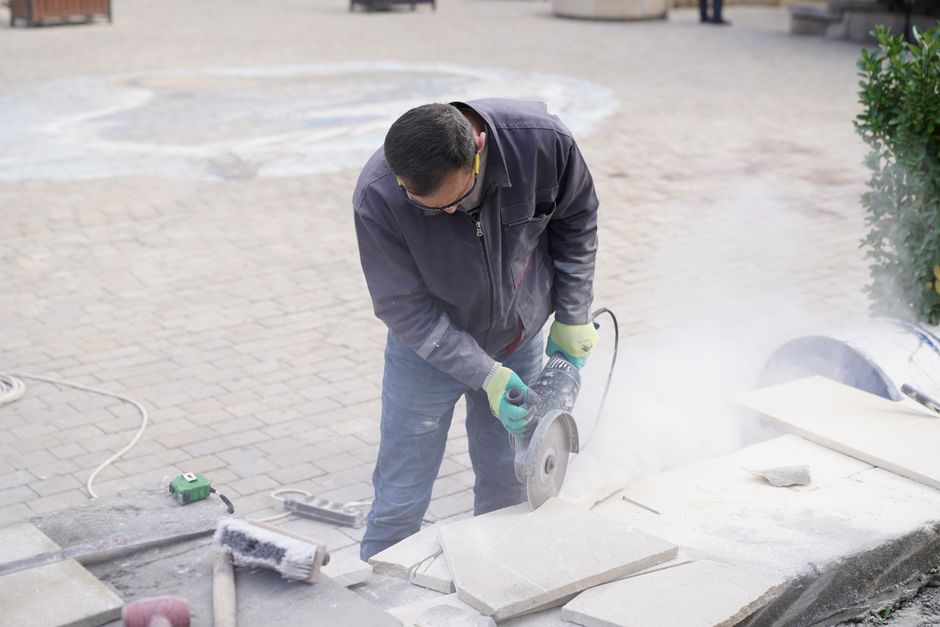
Construction sites are facing a dust crisis hiding in plain sight. Silica-related lung disease kills thousands of construction workers every year, and regulators across North America, Europe, and Australia are accelerating enforcement at a pace many employers are unprepared to meet. Cutting, grinding, drilling, and demolishing concrete releases respirable crystalline silica at concentrations that can exceed legal limits within minutes — often invisibly, and almost always without any alarm being raised. The science linking this hazard to irreversible, fatal disease is now unambiguous, and the pace of research is intensifying. Worldwide, scientists are working to translate that evidence into sharper detection technologies, earlier clinical interventions, and stronger on-site protections for the workers most exposed. What was once dismissed as an unavoidable occupational nuisance is now recognised as a preventable public health emergency — and the industry is running out of time to respond.
What Is Respirable Crystalline Silica?
Concrete contains silica in the form of quartz, one of the most abundant minerals on Earth. When concrete is cut, cored, scanned, or broken apart, fine particles are released into the air. Particles larger than 10 microns are generally filtered by the nose and throat, but respirable crystalline silica (RCS) — particles smaller than 4 microns — can travel deep into the lungs where the body has no effective way to remove them.
The accumulation of these micro-particles triggers an inflammatory response. Over months and years, this can cause irreversible scarring of lung tissue, a condition known as silicosis. Workers who regularly perform tasks like concrete coring or saw-cutting face some of the highest exposure levels in the entire construction sector. If you want to understand the physical processes that generate the most dust, learn about cutting and why controlled methods matter for both productivity and safety.
Health Conditions Linked to Silica and Concrete Dust
The health impacts of prolonged silica exposure extend well beyond silicosis. Current occupational medicine research has linked RCS exposure to a range of serious conditions:
- Silicosis: Progressive lung scarring that reduces breathing capacity. There are three recognised forms — acute, accelerated, and chronic — each varying in onset speed and severity.
- Lung cancer: The International Agency for Research on Cancer (IARC) classifies inhaled crystalline silica from occupational sources as a Group 1 carcinogen.
- Chronic obstructive pulmonary disease (COPD): Even without a silicosis diagnosis, workers exposed to concrete dust show higher rates of COPD and reduced lung function over time.
- Kidney disease: Emerging research suggests a link between long-term silica exposure and chronic kidney disease, though studies are still ongoing.
- Autoimmune disorders: Some studies have found elevated rates of rheumatoid arthritis and lupus among heavily exposed workers.
Symptoms are often insidious, appearing only after years of exposure. Shortness of breath, a persistent cough, and fatigue are early warning signs that workers and employers should never dismiss.
What Researchers Are Currently Studying
Occupational health research in the concrete sector is accelerating, driven by stricter regulatory limits in the United States, Europe, and Australia. Key areas of active investigation include:
Real-Time Dust Monitoring Technologies
Traditional dust sampling involves workers wearing filter cassettes that are analysed in a lab days later. Researchers are now developing wearable sensors that deliver real-time RCS readings, allowing supervisors to intervene immediately when exposure levels spike during high-risk tasks.
Biomarker Development
Scientists are identifying blood and urine biomarkers that can detect early silica-related inflammation before symptoms appear or imaging reveals damage. Early detection is crucial because silicosis — once established — is irreversible.
Pharmacological Interventions
Beyond prevention, researchers are exploring treatments that can slow or halt the inflammatory cascade triggered by silica particles. Studies investigating compounds that modulate inflammatory pathways are gaining traction, and interest in peptide-based therapies is growing in parallel fields of occupational medicine. Some professionals tracking these developments have also noted interest in metabolic and anti-inflammatory agents — for those researching related compounds, options to purchase retatrutide for research purposes are available through specialist suppliers.
Engineering Controls and Work Practice Studies
Research teams are comparing the effectiveness of wet suppression, on-tool extraction, and enclosed cab environments. Studies consistently show that combining engineering controls with proper respirator use reduces exposure far more effectively than either measure alone.
The Mental Health Burden on Silica-Exposed Workers
One dimension that occupational health discussions frequently overlook is the psychological toll carried by workers who have received a silicosis diagnosis — or who live with the daily uncertainty of knowing they may have been significantly exposed. Research published in recent years has documented elevated rates of anxiety, depression, and work-related post-traumatic stress among construction workers with dust-related diagnoses. The irreversible nature of silicosis amplifies this burden: unlike many occupational injuries, there is no recovery timeline to anchor hope to. Compound this with the financial pressures of reduced work capacity, the complexity of navigating compensation claims, and the stigma that sometimes surrounds respiratory illness in physically demanding industries, and it becomes clear that mental health support must be integrated into any comprehensive occupational health programme. Employers, unions, and health researchers are increasingly calling for dedicated psychological screening and referral pathways to sit alongside routine lung function testing for workers in high-exposure roles.
Younger Workers and Accelerated Disease Onset
A dimension that receives insufficient attention in mainstream occupational health coverage is the disproportionate risk faced by workers who begin high-exposure trades in their teens or early twenties. Cumulative silica exposure is the primary driver of disease severity, meaning a worker who starts grinding and cutting concrete at eighteen accumulates a lifetime dose far earlier than regulatory models historically anticipated. Recent cohort studies from Australia and the United Kingdom have identified cases of accelerated silicosis in workers as young as their early thirties — individuals who, under older exposure assumptions, would have been considered low risk. Researchers are now calling for exposure limits and health surveillance schedules to be recalibrated with younger entry ages in mind. Apprenticeship programmes and vocational training bodies are being urged to embed silica hazard awareness at the very start of a worker's career, rather than treating it as a concern for more experienced tradespeople. Early and sustained education is now viewed as one of the most cost-effective preventive interventions available.
The Role of Artificial Intelligence in Exposure Risk Prediction
An angle that has received relatively little mainstream attention is the growing use of artificial intelligence and machine learning to model and predict silica exposure risk before workers even set foot on a job site. Researchers are now training algorithms on datasets that combine task type, tool specifications, ventilation conditions, concrete composition, and historical air monitoring results to generate site-specific risk profiles in advance. Early trials suggest these models can identify high-risk task combinations with a precision that manual risk assessments rarely achieve, enabling project managers to schedule engineering controls proactively rather than reactively. Some research teams are integrating AI-generated risk scores directly into digital permit-to-work systems, so that no high-dust activity can be authorised without a corresponding control plan. While the technology is still maturing, occupational hygienists regard predictive modelling as a promising complement to real-time wearable monitoring — potentially closing the gap between what regulations require and what actually happens at the point of work.
Protecting Workers on the Job Site
Understanding how concrete deteriorates and behaves under stress is part of the broader knowledge base that keeps workers safe. For a deeper look at the structural risks involved, explore the causes and effects of concrete deterioration over time, which also touches on how compromised concrete can generate unexpectedly high dust loads during demolition or repair work.
Practical protective measures every employer should implement include:
- Mandatory health surveillance with baseline and periodic lung function testing
- Provision of P100 or FFP3-rated respirators with proper fit testing
- On-tool vacuum extraction for all cutting, grinding, and coring operations
- Wet cutting methods wherever engineering constraints allow
- Clear exposure reporting and incident recording systems
Frequently Asked Questions
How quickly can silicosis develop in concrete workers?
Chronic silicosis typically develops after 10 or more years of low-to-moderate exposure. However, accelerated silicosis can appear in as little as five years with heavier exposure, and acute silicosis — rare but fatal — can develop within months of extremely high exposure events such as dry-cutting in enclosed spaces without respiratory protection.
Is concrete dust the same as silica dust?
Not exactly. Concrete dust is a mixture that includes cement particles, aggregates, and additives. Crystalline silica from the quartz in aggregate is the most dangerous component. However, cement dust itself is also hazardous, causing occupational asthma and dermatitis, so all concrete dust exposure should be minimised regardless of the silica content.
Are there legal exposure limits for silica on construction sites?
Yes. In the United States, OSHA has set a permissible exposure limit (PEL) of 50 micrograms per cubic metre of air as an 8-hour time-weighted average for general industry and construction. The UK and EU have similar or stricter limits, and enforcement has tightened considerably in recent years.
What should workers do if they think they've been overexposed?
Any worker who suspects significant silica exposure should notify their supervisor immediately, request a medical evaluation, and document the circumstances of exposure. Early lung function screening can establish a baseline and catch changes before they become clinically significant. Workers should not wait for symptoms — by the time breathlessness appears, considerable damage may already have occurred.
Conclusion
Concrete dust and silica exposure are among the most serious — and most preventable — occupational health challenges facing the construction industry today. As researchers develop better monitoring tools, biomarkers, and intervention strategies, employers and workers have a responsibility to apply the protections already proven to work. Staying informed, investing in engineering controls, and prioritising regular health screening are the clearest paths to a safer industry for everyone on site.